
Block’hood is a unique ecological neighborhood-building simulator that challenges players to create sustainable urban environments. This game is not just about stacking blocks; it’s about thinking ahead, solving problems, and appreciating the delicate balance of ecosystems within a city. As a result, it enhances core skills such as problem-solving, planning and foresight, strategic thinking, adaptability, and aesthetic appreciation.
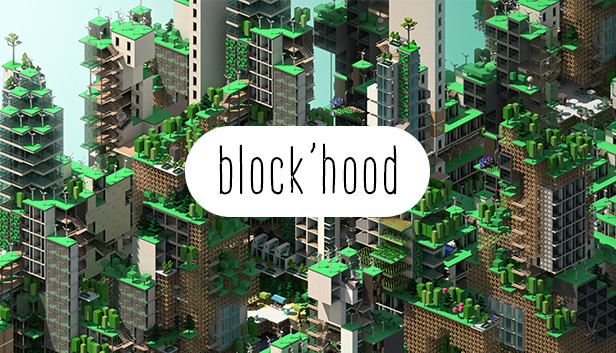
What is Block’hood? An overview
History, origin
Block’hood was developed by Plethora Project and released in 2017. It was designed to combine the fun of city-building with ecological awareness. The game encourages players to think about how different building blocks interact with each other, simulating the complex relationships found in real urban ecosystems.
Versions and editions
The game is primarily available as a digital download. It is offered on platforms such as Steam, with prices typically ranging from $10 to $15 USD. Block’hood supports multiple languages including English, Spanish, French, German, and others, making it accessible to a broad audience worldwide.
Platform availability
Block’hood is available on PC and Mac via Steam. It is not currently available on consoles or mobile devices, focusing on delivering a detailed and immersive experience on desktop platforms.
Audience & age
The game targets players aged 12 and above, appealing to those interested in city-building, ecology, and strategic simulation games. Its educational aspects also make it suitable for students and educators looking to explore urban planning concepts in an interactive way.
Educational Value – What skills does Block’hood develop?
- Problem-solving: Players must manage resources and balance the needs of their neighborhood, solving challenges that arise from interdependent systems.
- Planning and foresight: The game requires careful layout planning to ensure sustainability and growth, encouraging players to think several steps ahead.
- Strategic thinking: Success depends on understanding how different blocks interact and strategically placing them to optimize benefits and minimize drawbacks.
- Adaptability: Changing conditions and resource constraints force players to adjust their strategies dynamically.
- Aesthetic appreciation: The game’s modular design and visual style encourage players to create neighborhoods that are not only functional but also visually pleasing.
While no prior knowledge is strictly necessary, a basic understanding of ecological and urban planning concepts can enhance the gameplay experience.
How to play Block’hood?
What does it look like?
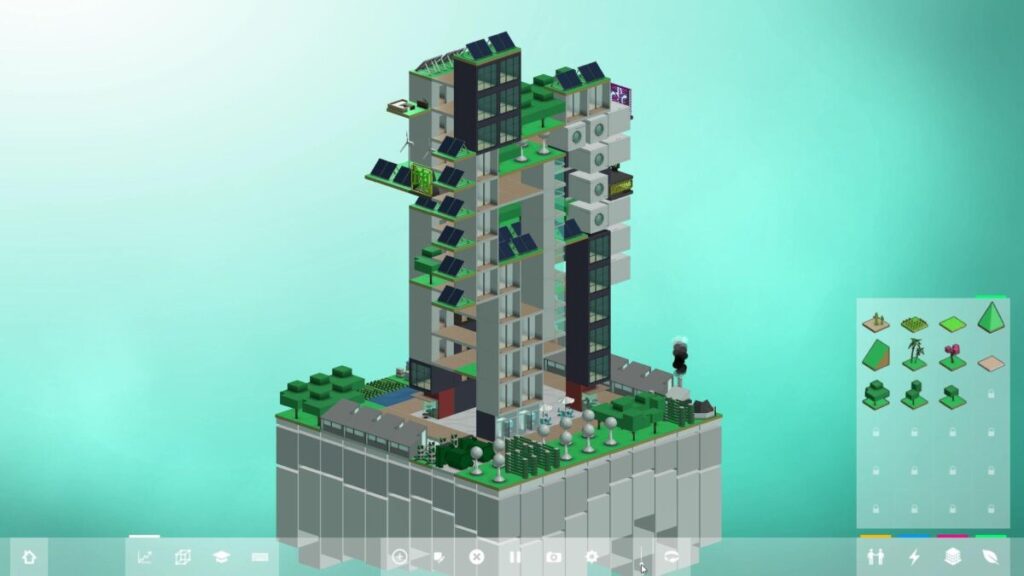
Upon purchase, players receive the full digital game with all core features unlocked. The game runs on PC and Mac systems with modest technical requirements: a dual-core processor, 2GB RAM, and a graphics card supporting OpenGL 3.3 or higher. It does not require high-end hardware, making it accessible to most modern computers.
Core concept, gameplay style & mechanics
The core gameplay revolves around building a vertical neighborhood by stacking modular blocks. Each block has unique resources and effects that influence neighboring blocks, creating a complex web of interactions. Players must consider resource flows such as food, water, and energy, balancing growth with sustainability.
Objective of the game
The main goal is to build a thriving, self-sustaining neighborhood. Players aim to maximize resource efficiency and population happiness while avoiding ecological collapse. Success is measured by how well the neighborhood functions over time.
Step-by-step basic gameplay loop
- Start with a basic block and begin stacking additional blocks to expand the neighborhood.
- Monitor resource flows and adjust block placement to maintain balance.
- Respond to challenges such as resource shortages or pollution.
- Experiment with different block combinations to optimize the ecosystem.
- Continue expanding while maintaining sustainability to achieve high scores.
Common mistakes
- Ignoring resource dependencies, leading to block failures.
- Overbuilding without considering sustainability.
- Failing to adapt to changing conditions in the neighborhood.
Expert tips
- Plan your neighborhood layout carefully before adding many blocks.
- Pay close attention to resource flows and adjust blocks as needed.
- Experiment with different block types to discover efficient combinations.
- Use the pause feature to analyze your neighborhood and plan your next move.
Alternative games to Block’hood
Townscaper is a relaxing city-building game that focuses on creating beautiful towns with simple mechanics. It’s a great alternative for players who enjoy aesthetic appreciation without complex resource management. You can explore it further here.
Tiny Glade offers a charming, nature-focused building experience where players cultivate a peaceful glade. It complements the ecological themes of the game and provides a more casual gameplay style. Discover more about it here.
Block’hood FAQ
What platforms can I play Block’hood on?
The game is available on PC and Mac via Steam. It is not currently available on consoles or mobile devices.
Is Block’hood suitable for children?
Yes, it is suitable for players aged 12 and older. Its educational content also makes it appropriate for teenagers and adults interested in urban planning and ecology.
Does Block’hood require prior knowledge?
No prior knowledge is needed, but understanding basic ecological and urban planning concepts can enhance the experience.
Can Block’hood help develop strategic skills?
Absolutely. The game encourages strategic thinking by requiring players to plan resource flows and block placements carefully.
Are there multiplayer options in Block’hood?
No, Block’hood is a single-player experience focused on individual problem-solving and planning.
For further learning and playing
Tiny Towns is a strategic city-building board game that continues the theme of planning and resource management on a smaller scale. It’s a great next step for players who enjoyed the strategic depth of the game.
Learn more about Tiny Towns here.
The Castles of Mad King Ludwig is a tile-laying game where players build elaborate castles, focusing on spatial strategy and aesthetics. It complements the architectural and planning skills developed in the game.
Discover The Castles of Mad King Ludwig here.
To sum up
The game offers a compelling mix of ecological simulation and strategic city-building. It’s perfect for players who want to develop problem-solving, planning, and adaptability skills while enjoying a visually appealing and thoughtful gameplay experience.
To play Block’hood
PC: Steam Store
Sources:
Steam – Block’hood
Wikipedia – Block’hood
Player Reviews
There are no reviews yet. Be the first one to write one.