
When it comes to timeless abstract strategy board games, few can match the depth and elegance of Go. This ancient game has captivated players for centuries, offering a unique blend of simplicity and profound strategic complexity. As the abstract strategy board game that helps enhance strategic thinking, planning and foresight, pattern recognition, decision-making, and adaptability, it continues to be a favorite among enthusiasts worldwide.
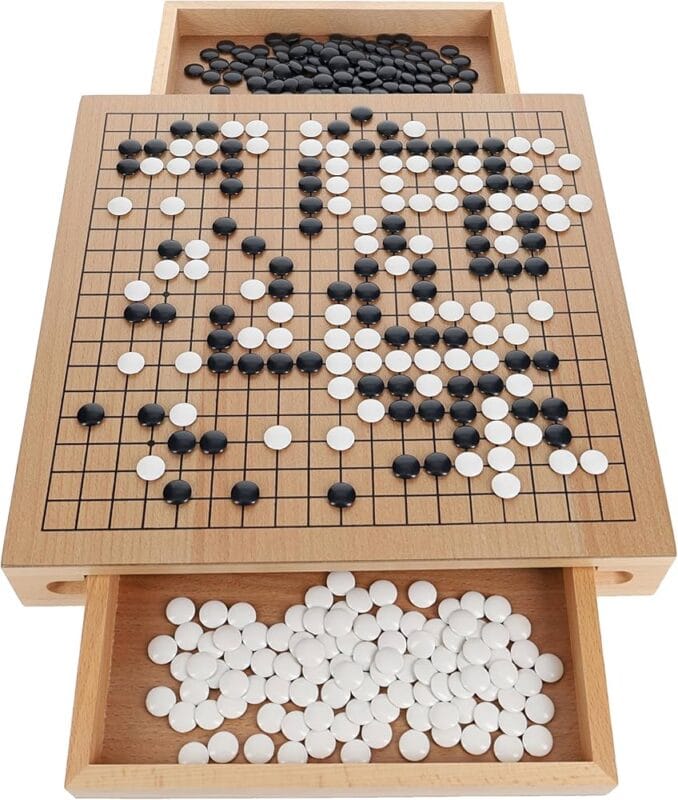
What is Go? An overview
History, Origin
Go is an ancient board game that originated in China more than 4,000 years ago, making it one of the oldest known board games still played today. It spread to Korea and Japan, where it developed into the form most familiar to modern players. The game has a rich cultural heritage and has been revered for its deep strategic elements and elegant simplicity.
Versions and Editions
Go is available in many physical and digital editions worldwide. Traditional sets usually include a wooden board and black and white stones, with prices ranging from $20 for beginner sets to several hundred dollars for high-quality handcrafted boards. The game is widely available in multiple languages including English, Japanese, Chinese, and Korean, ensuring accessibility to a global audience.
Platform availability
Besides classic physical sets, Go can be played on various digital platforms, including PC, smartphones, and tablets. Many apps and online servers allow players to compete globally, making it easy to learn and play anytime.
Level of complexity
Despite its simple rules, Go has an astonishingly high level of complexity. The vast number of possible board configurations allows for endless strategic possibilities, making it a lifelong learning experience for players of all skill levels.
Audience & Age
The game is suitable for players aged 8 and up, though younger players can also learn with guidance. It appeals to casual players as well as competitive strategists, making it a versatile choice for families, schools, and serious hobbyists.
Educational Value – What skills does Go develop?
- Strategic thinking: The game requires players to plan long-term moves and anticipate opponents’ strategies, sharpening their ability to think ahead.
- Planning and foresight: Success depends on careful placement of stones with an eye on future consequences, enhancing foresight skills.
- Pattern recognition: Players learn to recognize common shapes and formations, which is key to making strong moves and defending territory.
- Decision-making: Each move involves weighing risks and benefits, improving the player’s ability to make thoughtful decisions under pressure.
- Adaptability: The dynamic nature of the game means plans often need adjustment, teaching flexibility and quick thinking.
While no prior knowledge is strictly required to start playing, understanding basic rules and common strategies greatly enhances the experience.
How to play Go?
What does it look like?
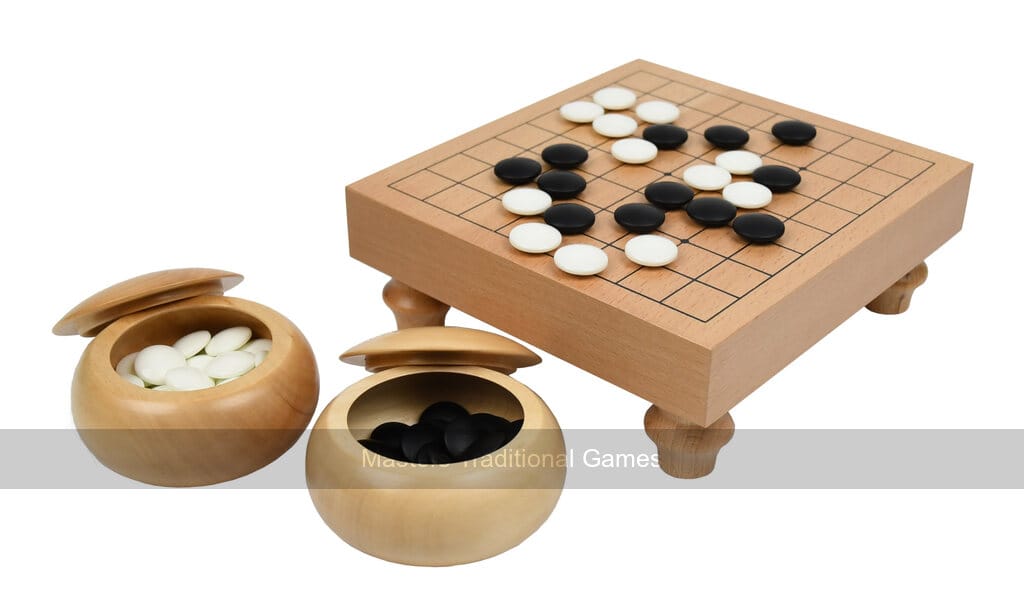
A typical Go set includes a grid board, traditionally 19×19 lines, and two sets of stones—black and white. The board is usually made of wood or bamboo, and stones are crafted from glass, slate, or shell. Digital versions require a smartphone, tablet, or PC with internet access to play online or against AI.
Core concept, gameplay style & mechanics
The game is played by two players who alternately place stones on the board’s intersections. The core mechanic involves surrounding territory and capturing opponent stones by completely enclosing them. The gameplay is turn-based, with a focus on area control and tactical positioning.
Objective of the game
The main objective is to control more territory on the board than your opponent by the end of the game. This is achieved by strategically placing stones to form secure areas and capturing enemy stones to reduce their influence.
Initial Setup and learning curve
Setup is straightforward—players choose black or white stones, and the board starts empty. Beginners may find the learning curve steep due to the game’s depth, but starting on smaller boards (9×9 or 13×13) helps ease entry into the game.
Step-by-step Basic Gameplay Loop
- Players decide who plays black (usually goes first) and who plays white.
- Black places a stone on any empty intersection.
- White responds by placing a stone on another empty intersection.
- Players alternate turns, aiming to surround territory or capture opponent stones.
- The game continues until both players pass consecutively, signaling no further beneficial moves.
- Territories and captured stones are counted to determine the winner.
Common mistakes
- Over-concentration of stones in one area, limiting influence elsewhere.
- Neglecting to protect groups, leading to unexpected captures.
- Failing to recognize common patterns that can secure territory or threaten opponents.
- Rushing moves without fully considering long-term consequences.
Expert tips
- Focus on balance between offense and defense to maintain flexibility.
- Learn common shapes and life-and-death problems to improve tactical skills.
- Play regularly against stronger opponents to accelerate learning.
- Review games and analyze mistakes to deepen understanding.
Alternative games to Go
If you enjoy Go, you might also appreciate Chess and Shogi. Both are classic abstract strategy games with deep strategic elements.
Chess offers a battle of tactical maneuvers and piece management, while Shogi, often called Japanese chess, introduces the unique mechanic of reusing captured pieces. These games provide alternative but complementary challenges for players interested in strategic board games.
FAQ
What is the best age to start playing Go?
Go is suitable for players as young as 8 years old, but younger children can also learn with proper guidance. The game’s simple rules make it accessible, while its depth appeals to all ages.
How long does a typical game of Go last?
Game length varies widely depending on board size and player skill. A casual game on a 9×9 board may take 15-30 minutes, while a full 19×19 game can last several hours.
Is prior experience needed to play Go?
No prior experience is necessary to start playing, but learning basic rules and strategies greatly enhances enjoyment and skill development.
Can Go be played online?
Yes, many websites and apps offer online Go play against people worldwide or AI opponents, making it easy to practice and improve.
What are the benefits of playing Go?
Playing Go improves strategic thinking, planning, pattern recognition, decision-making, and adaptability, making it a valuable educational tool as well as an enjoyable pastime.
For Further Learning and Playing
Hive is a modern abstract strategy game that, like Go, emphasizes spatial reasoning and tactical play. It uses hexagonal tiles representing insects, each with unique movement rules. Hive offers a fresh challenge while building on the strategic foundations familiar to Go players. Learn more about Hive here.
AlphaGo-inspired trainers are digital tools and applications developed after the success of AlphaGo, the AI that famously defeated top human players. These trainers help players improve by analyzing games, suggesting moves, and teaching advanced strategies. They represent a natural progression for those who want to deepen their Go skills with cutting-edge technology. Explore AlphaGo-inspired trainers here.
To sum up
Go is a timeless abstract strategy board game that offers rich educational value by enhancing key cognitive skills such as strategic thinking, planning, pattern recognition, decision-making, and adaptability. Whether played on a traditional board or digitally, it remains a fascinating challenge for players of all ages and skill levels.
Sources:
- Wikipedia – Go (game)
- Sensei’s Library – Go
- Encyclopedia Britannica – Go board game
- United States Go Association
Player Reviews
There are no reviews yet. Be the first one to write one.