
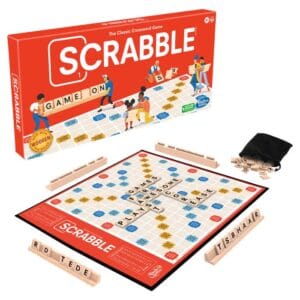
Scrabble: The Classic Word Construction Board Game for Skill Building
Discover Scrabble, the classic word construction board game that enhances vocabulary, reading, strategy, pattern recognition, and decision-making skills.
Language games make vocabulary, grammar, and communication skills easier to absorb. Instead of memorizing word lists, players interact with words, sounds, and sentence structures in dynamic ways.
The history of language learning stretches back thousands of years. Scholars like Aristotle studied rhetoric and persuasion, while later linguists such as Noam Chomsky explored how humans acquire language. However, traditional methods often relied heavily on repetition and drills. Over time, educators recognized that play improves retention and engagement.
Board games and word puzzles played an important role in this shift. Scrabble, created in the 1930s, turned vocabulary building into friendly competition. Later, crossword puzzles and word searches became common classroom tools. Then digital platforms introduced interactive language apps and multiplayer word games, expanding access worldwide.
These category of games develop essential communication skills. They strengthen both expressive and receptive abilities, which are key to academic and professional success.
Players improve:
Vocabulary growth
Spelling accuracy
Grammar awareness
Reading comprehension
Creative expression
However, the real value goes beyond mechanics. Language games improve pattern recognition and contextual understanding. Words stop feeling isolated. They connect within meaningful systems.
Language develops through practice and feedback. Games provide both. Immediate responses show whether a word fits, whether a sentence structure works, or whether pronunciation is correct. As a result, mistakes become part of the process instead of sources of frustration.
Even though textbooks remain important, interactive play adds emotional engagement. Competition, collaboration, and storytelling increase retention. In fact, research in educational psychology consistently shows that active engagement improves long-term memory.
Several well-known titles support language learning:
Scrabble – Vocabulary and strategic word placement
Boggle – Rapid word recognition
Crossword puzzles – Context-based vocabulary recall
Digital language apps with gamified features – Structured progression and feedback
Each one targets different aspects of linguistic development.
Strong language skills support academic performance, career opportunities, and social interaction. These category of games provide structured yet enjoyable practice. They simplify complex concepts without oversimplifying meaning.
This approach has limits. Games alone do not replace deep reading or sustained writing practice. However, they build confidence and reinforce foundational skills.
When language becomes play, learning becomes consistent. And consistency builds mastery.
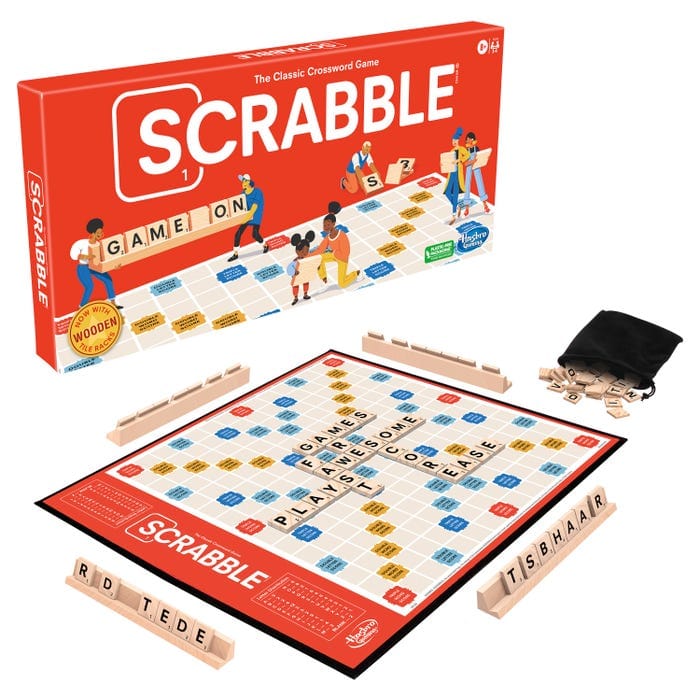
Discover Scrabble, the classic word construction board game that enhances vocabulary, reading, strategy, pattern recognition, and decision-making skills.
Discover Duolingo, the gamified language learning app that enhances memory, reading comprehension, vocabulary, attention, and focus for learners worldwide.