
Chess
is one of the world’s most enduring strategy games, played across clubs, classrooms, homes, and digital platforms. It combines simple movement rules with deep tactical and positional ideas, which is why it remains relevant for beginners and experts alike. In fact, the Abstract strategy board game that helps enhance Strategic thinking,Planning and foresight,Decision-making,Pattern recognition has become a global standard for competitive mind sports and educational play.
Although the basics can be learned quickly, mastery takes time. Each move matters, and players constantly weigh risk, timing, and long-term plans. Therefore, it is easy to see why the game is valued both for fun and for skill-building.
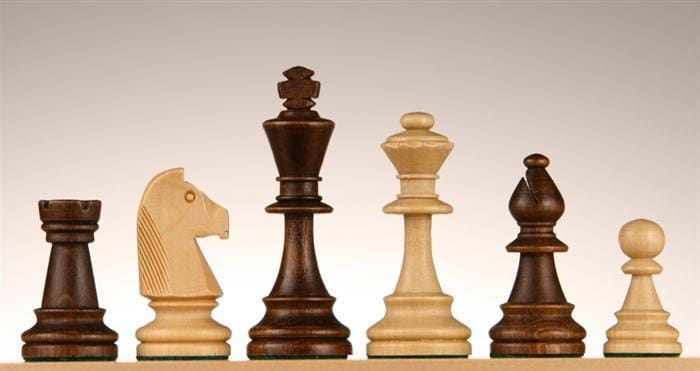
What is Chess? An overview
Chess is a two-player abstract strategy board game played on an 8×8 checkered board. Each player starts with 16 pieces: one king, one queen, two rooks, two bishops, two knights, and eight pawns. The players take turns moving one piece at a time according to fixed rules, with White moving first.
The central idea is to attack the opposing king while protecting your own. However, winning usually depends on much more than direct attacks. Strong play also involves piece development, control of key squares, pawn structure, and accurate calculation.
History, origin
Modern chess developed from earlier games, especially chaturanga, which originated in India around the middle of the first millennium. From there, the game spread to Persia, where it was known as shatranj, and later moved into the Islamic world and Europe. Over time, the rules evolved, especially in late medieval Europe, into the faster and more dynamic form recognized today.
The international governing body for competitive chess is FIDE, founded in 1924. Today, FIDE oversees world championships, ratings, and official regulations. As a result, the game has a well-established competitive structure with global participation.
Versions and editions
There are many physical editions, from inexpensive beginner sets to premium wooden tournament boards. Entry-level plastic sets often cost about $10 to $30, while club and tournament-style sets usually range from $30 to $150. Luxury handcrafted sets can cost far more, of course.
Digital versions are widely available through official and major platforms. Because the rules are universal, the game is available in many languages, including English, Spanish, French, German, Russian, Chinese, and more on major chess websites and apps. Printed instructions with retail sets also commonly appear in multiple languages depending on the publisher and region.
Platform availability
Chess can be played in several formats:
- Physical board game: Requires a board and 32 pieces.
- Web browser: Available through major online chess platforms with an internet connection and a modern browser.
- PC and Mac: Play is available via desktop software or browser-based services.
- Smartphones and tablets: Android and iOS apps are widely available and usually require compatible operating systems and internet access for online play.
Some digital options support offline puzzles or local play, while ranked matches and lessons usually require an account and connection. Therefore, the barrier to entry is low, whether you prefer a board on a table or a phone in your pocket.
Audience & age
The game is suitable for a very broad audience. Many publishers label beginner-friendly sets for ages 6+ or 8+, although younger children may enjoy it with guidance. At the same time, it also supports lifelong competitive play, from school clubs to international tournaments.
Because the rules are stable and the skill ceiling is extremely high, it works well for families, students, hobbyists, and serious competitors. Even though it is easy to start, players usually improve gradually through practice.
Educational Value
Learning subject
Chess is a strong fit for learning about strategy games because it highlights core concepts such as tempo, space, initiative, coordination, and trade-offs. Players learn how short-term tactics connect to long-term planning, which is a central lesson in strategic play. Therefore, it offers a clear, practical introduction to how abstract strategy systems work.
It also teaches players to evaluate positions rather than rely on luck. Since there is no hidden information and no randomness in standard play, outcomes depend on choices and execution. That makes it especially useful for understanding cause and effect in decision-making games.
What skills does Chess develop?
The Abstract strategy board game that helps enhance Strategic thinking,Planning and foresight,Decision-making,Pattern recognition
does so through repeated practice and reflection.
- Strategic thinking: Players build plans around king safety, piece activity, pawn structure, and control of important squares.
- Planning and foresight: Good moves often prepare future ideas several turns ahead, such as castling early or improving piece placement.
- Decision-making: Each turn asks the player to compare candidate moves, manage risk, and choose under pressure.
- Pattern recognition: Frequent motifs such as forks, pins, skewers, discovered attacks, mating nets, and basic endgames become easier to spot over time.
No advanced prior knowledge is required to start, but beginners do need to learn how each piece moves, the special rules such as castling and en passant, and the basic goal of checkmate. After that, improvement comes from practice, puzzles, and reviewing games.
How to play Chess?
What does it look like?
A standard set includes an 8×8 board with alternating light and dark squares and 32 pieces in two colors. Each side has the same collection of pieces, with distinctive shapes to show movement roles. Tournament sets may also include a chess clock, though clocks are not required for casual games.
Digital versions display the same board and piece setup on screen. Many also add move hints, analysis boards, puzzles, and online matchmaking. As a result, beginners can start with either a physical set or an app.
Core concept, gameplay style & mechanics
At its core, chess is a turn-based contest of position, tactics, and timing. There is no luck element in standard rules, so every result comes from the interaction of the two players’ decisions. However, because both sides can see the full board, anticipating the opponent is essential.
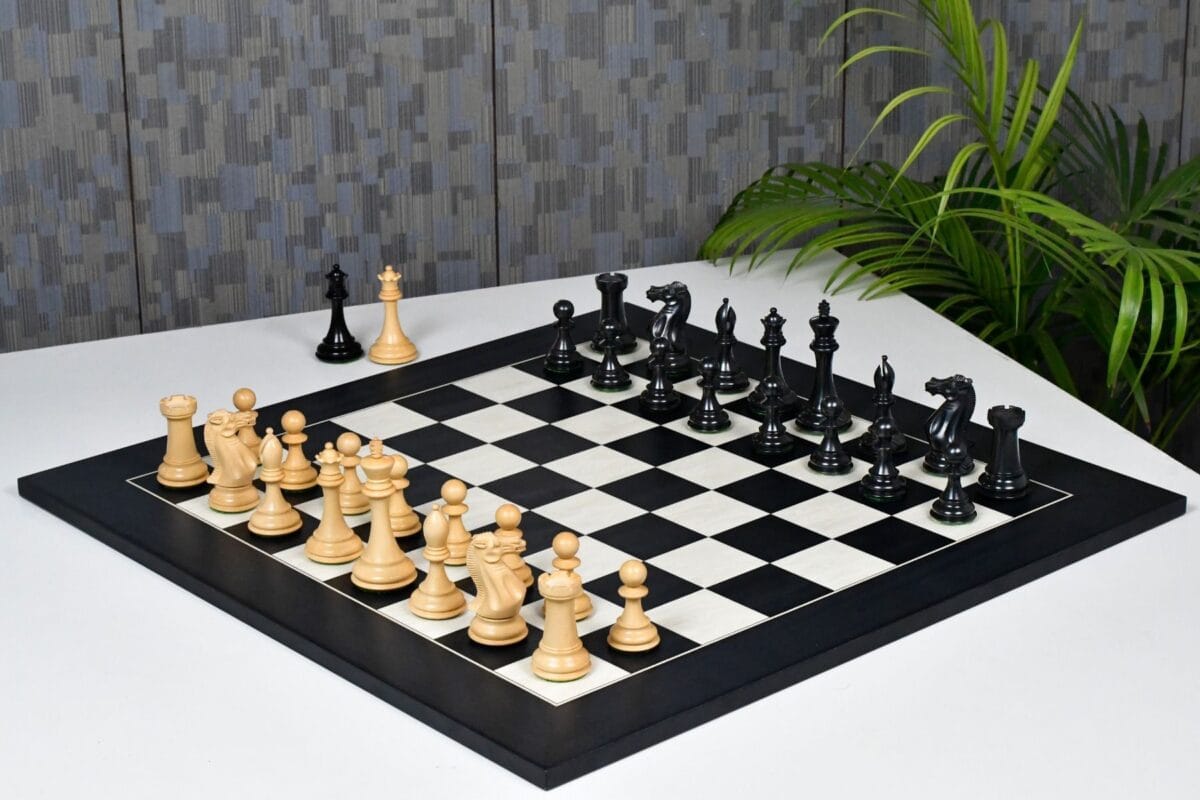
The main mechanics include legal piece movement, captures, checks, checkmate threats, promotion, castling, and drawn positions such as stalemate. Then, as the game progresses, players usually move through opening development, middlegame complications, and endgame conversion. That arc gives the game its famous depth.
Objective of the game
The objective is to checkmate the opponent’s king. That means the king is under attack and there is no legal move to escape the threat. If checkmate does not occur, the game can also end in a draw under several official conditions.
Step-by-step basic gameplay loop
- Set up the board with White on the first rank and Black opposite.
- White moves first, then players alternate turns.
- Develop pieces, fight for central control, and protect the king, often by castling.
- Create threats, win material, or improve position through tactical and strategic play.
- If possible, launch a mating attack or convert an advantage in the endgame.
- Win by checkmate, or draw if no winning result is reached under the rules.
Common mistakes
- Moving the same piece repeatedly in the opening without a good reason.
- Ignoring king safety and delaying castling.
- Leaving pieces undefended.
- Focusing only on your own plan and missing the opponent’s threats.
- Trading into lost endgames without checking the consequences.
Expert tips
- Develop efficiently: Bring out minor pieces and connect the rooks.
- Check forcing moves: Look at checks, captures, and threats before choosing a move.
- Study patterns: Tactical puzzles and basic mates improve speed and accuracy.
- Review your games: Analysis helps you understand recurring mistakes.
Alternative games to Chess
If you enjoy this style of deep planning, Go is an excellent alternative. It also has simple rules with immense strategic depth, but it focuses more on territory, influence, and board-wide balance than direct piece movement.
Shogi, often called Japanese chess, is another strong option. It shares some familiar ideas with chess, yet captured pieces can be dropped back into play, which creates sharper tactical swings and fresh strategic puzzles.
Chess FAQ
Is chess hard to learn?
No. The basic rules can be learned fairly quickly, but playing well takes practice. That balance is one reason the game remains so popular.
How long does a game of chess take?
It depends on the time control. Casual games may last 10 to 60 minutes, while blitz is much faster and classical tournament games can last several hours.
Can chess end in a draw?
Yes. Common draw results include stalemate, insufficient mating material, agreement, repetition, and the official move-count rule under FIDE regulations.
What age can children start chess?
Many children start around ages 6 to 8, although some learn earlier with support. Readiness usually depends more on attention span than age alone.
Is chess a sport or a board game?
It is a board game, and it is also widely recognized as a sport in organized competition. FIDE governs international events in a sports-style framework.
For further learning and playing
is a coherent next step if you want strategy mixed with hidden information. Unlike chess, not all information is visible, so it trains deduction and bluffing alongside planning.
Hive is another smart continuation. It is an abstract strategy game without a board, and its focus on piece movement, tactical traps, and spatial control will feel familiar to many chess players.
To sum up
Chess
remains a classic because it is accessible, competitive, and endlessly deep. Most of all, the Abstract strategy board game that helps enhance Strategic thinking,Planning and foresight,Decision-making,Pattern recognition offers lasting value whether you play casually or study it seriously.
To play Chess
Web browser: https://www.chess.com/play
Web browser: https://lichess.org/
PC: https://store.steampowered.com/app/314340/Chess_Ultra/
Smartphone: https://play.google.com/store/apps/details?id=com.chess
Smartphone: https://apps.apple.com/us/app/chess-play-learn/id329218549
Smartphone: https://play.google.com/store/apps/details?id=org.lichess.mobileapp
Smartphone: https://apps.apple.com/us/app/lichess-online-chess/id968371784
Sources of information
FIDE HandbookFIDE HistoryEncyclopaedia Britannica: ChessThe Metropolitan Museum of Art: ChessChess.com: Chess Rules and TermsLichess Learn Chess
Player Reviews
There are no reviews yet. Be the first one to write one.