
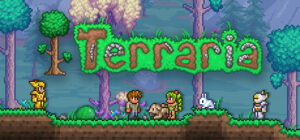
Terraria: The Sandbox Survival Crafting Game That Boosts Your Skills
Discover Terraria, the sandbox survival crafting game that enhances problem-solving, creative thinking, planning, adaptability, and strategic skills.
Construction games turn players into architects, engineers, and creative problem-solvers. Instead of reacting quickly, you plan, design, and build.
In educational game design, construction mechanics are some of the most powerful tools available. Why? Because building something from scratch naturally develops critical thinking. And of course, it makes learning feel meaningful and personal.
Construction games focus on designing, assembling, and managing structures or systems. You might build a city, a bridge, a house, or even an entire world.
Common features include:
Resource management
Spatial planning
Creative design
Problem-solving through trial and error
Unlike action games, construction games reward patience and foresight. Therefore, players learn to think ahead and evaluate consequences before acting.
Construction-based gameplay has been popular for decades. Early titles like SimCity introduced players to city planning and economic management. Later, RollerCoaster Tycoon and The Sims expanded the concept into simulation-driven creativity.
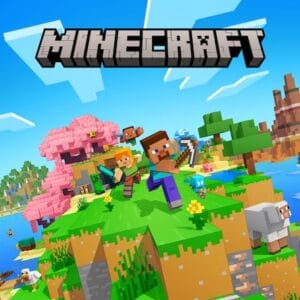
However, it was Minecraft that truly revolutionized construction games. By giving players open-ended building tools, it transformed gaming into a platform for creativity, coding, architecture, and collaboration.
Today, games like Cities: Skylines, Terraria, and sandbox builders continue to expand educational possibilities.
Construction games develop both cognitive and practical skills. In fact, they often mirror real-world design thinking processes.
Players strengthen:
Spatial reasoning
Planning and organization
Systems thinking
Budget and resource management
Creative expression
Because players see the direct results of their design choices, learning becomes concrete. If a bridge collapses, you redesign it. If a city runs out of money, you rethink your strategy.
One of the biggest advantages of construction games is safe experimentation. You can test ideas without real-world consequences.
Failure becomes feedback. You adjust materials, layout, or strategy. Then you try again. As a result, players develop resilience and analytical thinking.
This mirrors real engineering and architectural processes. Therefore, these games are especially effective for STEM-related learning.
Many schools already use construction-based platforms like Minecraft Education Edition. Teachers apply them to:
Teach geometry and scale
Explore physics concepts
Model historical cities
Practice collaboration
Even though the environment feels playful, the learning outcomes are measurable and structured.
Construction games empower players to move from consumer to creator. Instead of following a fixed path, they design their own solutions.
In a world that values innovation and creativity, these skills are essential. And when learning feels like building something meaningful, motivation naturally increases.
That’s the power of construction games: you don’t just play. You create.
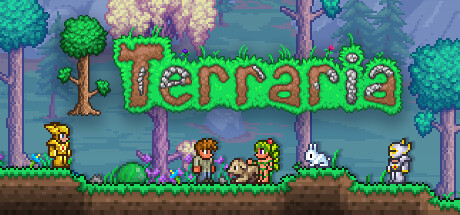
Discover Terraria, the sandbox survival crafting game that enhances problem-solving, creative thinking, planning, adaptability, and strategic skills.
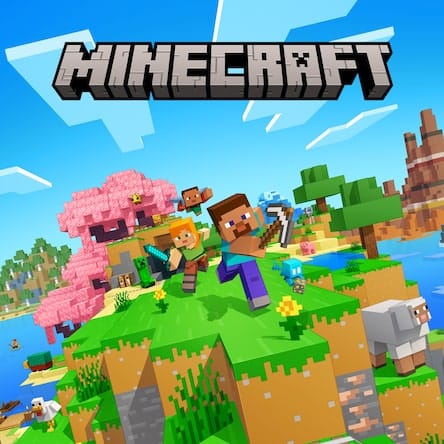
Explore Minecraft, the open-ended sandbox building game that enhances creative thinking, problem-solving, planning, and adaptability for players of all ages.