
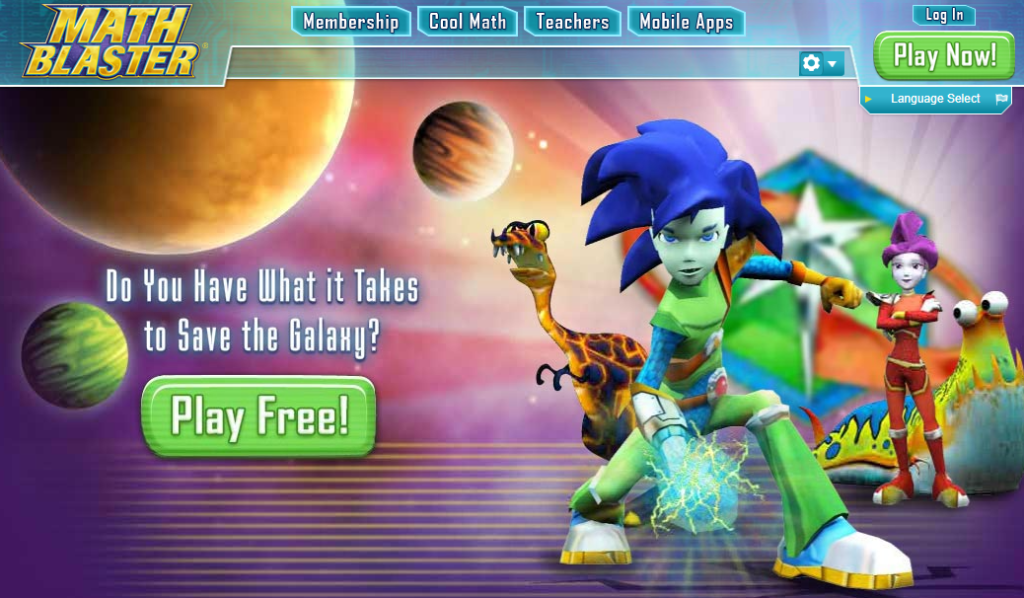
Math Blaster: The Space-Themed Arcade Arithmetic Game for Skill Building
Math Blaster is a space-themed arcade arithmetic game that enhances mathematical reasoning, attention, focus, and dexterity for children aged 6-12.
Action games are known for speed, reflexes, and intensity. But beyond the adrenaline, they offer real learning value when designed well. These games push you to react, adapt, and improve under pressure. As a result, they train skills that transfer far beyond the screen.
Having worked with game-based learning and interactive design, I’ve seen how action mechanics can support focus, persistence, and problem-solving. Of course, not every action game teaches the same things, but the category has clear educational potential.
Action games focus on real-time interaction. You move, aim, dodge, and respond constantly. Unlike turn-based genres, there’s no pause to overthink every move.
Common elements include:
Fast-paced gameplay
Hand-eye coordination
Real-time decision-making
Increasing difficulty over time
Because of this, action games keep players fully engaged. Therefore, learning happens through repetition and feedback rather than explanation alone.
Action games have been around since the early days of video games. Titles like Space Invaders, Pac-Man, and Donkey Kong defined the genre in the late 1970s and 1980s. These games were simple, but they demanded precision and focus.
Later, games like Super Mario Bros., Doom, and Sonic the Hedgehog expanded what action gameplay could be. In fact, they introduced level design, timing, and spatial awareness as core skills. Over time, the genre became more complex and more expressive.
Action games train the brain in ways traditional learning often doesn’t. They require constant attention and quick adjustments.
Well-designed action games help develop:
Reaction speed
Attention and focus
Spatial awareness
Pattern recognition
Even though they look chaotic, these games reward control and consistency. As a result, players learn to stay calm and focused under pressure.
One reason action games work so well is feedback. You instantly know when something works or fails. There’s no long delay between action and consequence.
Failure isn’t a setback. It’s information. Players retry, adjust timing, and improve movement. Therefore, learning feels natural and motivating instead of stressful.
Educators and researchers have studied action games for years. Studies link them to improved visual attention and faster decision-making. Some training programs even adapt action mechanics for skill development.
Examples include:
Reflex-training games
Reaction-time challenges
Simulation-based action tasks
These tools borrow from commercial game design but apply it with clear learning goals.
Today’s action games combine speed with strategy. Games like Celeste, Hades, and Apex Legends demand timing, planning, and adaptation. Players don’t just react. They learn patterns and anticipate outcomes.
As a result, skills like persistence, focus, and emotional control improve. These are valuable in sports, learning, and high-pressure work environments
Math Blaster is a space-themed arcade arithmetic game that enhances mathematical reasoning, attention, focus, and dexterity for children aged 6-12.
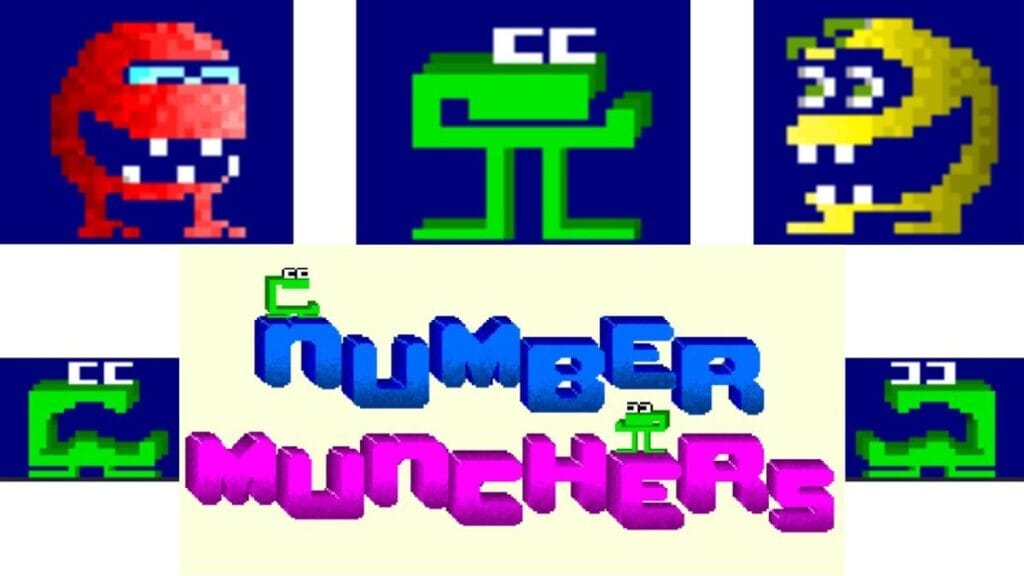
Discover Number Munchers, the arcade-style numeric classification game that enhances mathematical reasoning, attention, focus, and dexterity for learners.
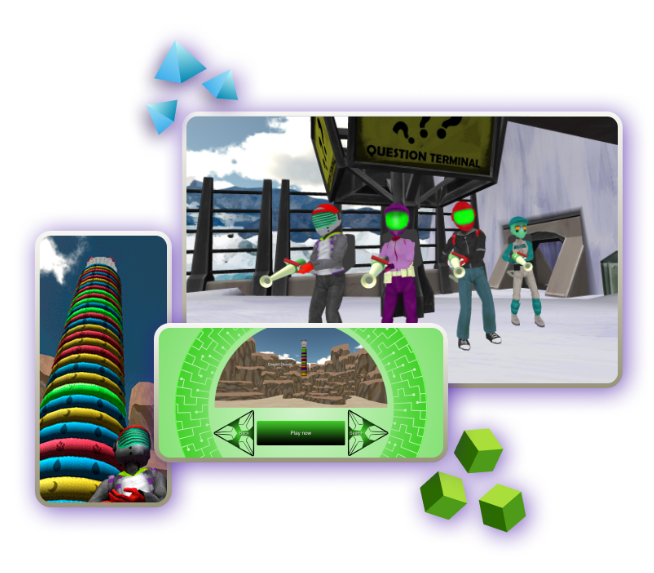
DimensionU is a competitive multiplayer game that enhances mathematical reasoning, focus, resilience, strategic thinking, and adaptability in learners.
Discover Math Blaster, the arcade math shooter that enhances mathematical reasoning, attention, dexterity, multitasking, and decision-making skills.
Discover Number Munchers, the arcade-style educational math game that enhances mathematical reasoning, attention, pattern recognition, and decision-making skills.