
Dominoes is a classic tile-based abstract strategy game that has been enjoyed worldwide for centuries. Known for its simple yet engaging gameplay, it challenges players to use pattern recognition, planning and foresight, strategic thinking, and decision-making skills. Whether you’re playing casually with friends or diving into competitive matches, this game offers a rich experience.
What is Dominoes? An overview
History, Origin
Dominoes originated in China during the Song dynasty around the 12th century and later spread to Europe in the 18th century. It evolved from traditional dice games and quickly became a popular pastime. Over time, the game’s rules and styles adapted, leading to many regional variations. Its longevity and global reach are a testament to its timeless appeal.
Versions and Editions
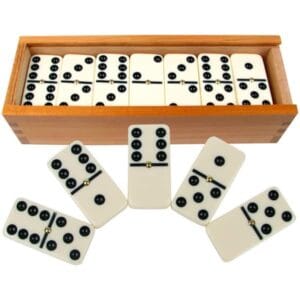
There are numerous versions of the game, including Block, Draw, and Mexican Train, each with slightly different rules. Domino sets typically come with 28 tiles, but larger sets exist for more complex variants. Prices for physical domino sets range from $10 for basic plastic tiles to over $50 for premium wooden or specialty editions. The game is available worldwide and in many languages including English, Spanish, French, Chinese, and more, making it accessible to a broad audience.
Platform availability
Dominoes is widely available both as a physical game and in digital formats. You can find it on mobile apps, online gaming platforms, and even on consoles. This versatility allows players to enjoy it anytime, anywhere.
Level of complexity
The game is easy to learn but offers deep strategic possibilities. Beginners can pick up the basics quickly, while advanced players can explore complex tactics and strategies that keep the game engaging over time.
Audience & Age
Dominoes is suitable for players of all ages, typically recommended for ages 6 and up. Its simple rules make it accessible to children, while its strategic depth appeals to adults and seniors alike. Families, casual gamers, and competitive players all find value in this timeless game.
Educational Value – What skills does Dominoes develop?
- Pattern recognition: Players identify matching tile values and anticipate potential plays, improving their ability to recognize and predict patterns quickly.
- Planning and foresight: Successful gameplay requires thinking several moves ahead, considering the consequences of each play to maximize advantage.
- Strategic thinking: The game encourages players to develop tactics to block opponents, control the board, and optimize tile placement.
- Decision-making: Each turn involves choosing the best move from available options, honing players’ ability to make informed decisions under pressure.
Prior knowledge needed is minimal; players just need to understand the basic matching rules, making it an excellent introduction to strategic thinking games.
How to play Dominoes?
What does it look like?
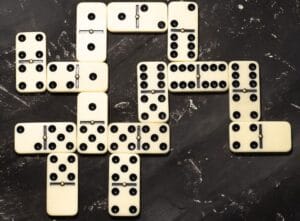
The standard domino set consists of rectangular tiles, each divided into two square ends marked with a number of spots (pips) ranging from zero to six. When purchased, a physical set usually includes 28 tiles made of plastic, wood, or bone. In digital versions, the game is available on smartphones, tablets, and computers with minimal technical requirements, typically needing only a stable internet connection and a device capable of running basic apps or browser games.
Core concept, gameplay style & mechanics
The core mechanic is matching tiles end-to-end by identical numbers. Players take turns placing tiles on the table, extending the chain. The style is turn-based with an emphasis on blocking opponents and maximizing your tile usage.
Objective of the game
The main goal is to be the first player to play all your tiles or to achieve the lowest score when no more moves are possible. Scoring depends on the sum of pips remaining in opponents’ hands.
Initial Setup and learning curve
Players start by shuffling the tiles face down and drawing a set number depending on the variant. The learning curve is gentle; new players quickly grasp the matching principle, while mastering strategy takes practice.
Step-by-step Basic Gameplay Loop
- Shuffle and draw tiles.
- Determine the starting player, often the one with the highest double tile.
- Players take turns placing tiles matching numbers on open ends.
- If a player cannot play, they draw from the boneyard (remaining tiles) or pass.
- The game continues until a player empties their hand or no moves remain.
- Calculate scores if applicable and start a new round.
Common mistakes
- Failing to plan ahead, leading to blocked moves.
- Ignoring opponents’ potential plays and strategy.
- Playing tiles too quickly without considering the best position.
- Not keeping track of which tiles have been played.
Expert tips
- Keep track of tiles your opponents have played to anticipate their moves.
- Hold onto doubles strategically to control the board.
- Use blocking tactics to limit opponents’ options.
- Balance between playing high-value tiles early and saving flexible tiles for later.
Alternative games to Dominoes
If you enjoy this tile-based abstract strategy game, you might also like Rummikub and Backgammon. Rummikub combines tile matching with number sequencing, offering a dynamic and fast-paced experience. Backgammon blends luck and strategy with dice rolls and piece movement, making it a classic alternative that also challenges planning and decision-making skills.
FAQ
What is the origin of Dominoes?
Dominoes originated in China during the Song dynasty and was introduced to Europe in the 18th century, evolving into the game we know today.
How many tiles are in a standard domino set?
A standard double-six domino set contains 28 tiles, each marked with all possible pairs of numbers from 0 to 6.
Can Dominoes be played solo?
While traditionally a multiplayer game, there are solitaire variants and digital versions that allow solo play.
What skills does Dominoes help develop?
It enhances pattern recognition, planning and foresight, strategic thinking, and decision-making skills.
Is Dominoes suitable for children?
Yes, it’s generally recommended for ages 6 and up due to simple rules and educational benefits.
For Further Learning and Playing
After mastering Dominoes, you might explore Mahjong, a tile-based game that deepens pattern recognition and strategic planning with more complex rules and cultural history. Another excellent follow-up is Set, a fast-paced card game focusing on visual pattern recognition and quick decision-making. Both games complement Dominoes well and expand your strategic skills.
To sum up
Dominoes is a timeless tile-based abstract strategy game that is easy to learn but offers deep strategic challenges. It helps develop essential cognitive skills such as pattern recognition, planning and foresight, strategic thinking, and decision-making, making it a valuable and enjoyable game for all ages.
Sources:
Player Reviews
Great game
Love dominoes!